
Monday, February 18, 2019
She Would Be King
Alike spirits separated at great distances will always be bound to meet, even if only once; kindred souls will always collide; and strings of coincidences are never what they appear to be on the surface, but instead are the mask of God.

Friday, June 30, 2017
Iron Youth
Kantorek would say that we stood on the threshold of life. And so it would seem. We had as yet taken no root. The war swept us away. For the others, the older men, it is but an interruption. They are able to think beyond it. We, however, have been gripped by it and do not know what the end may be. We know only that in some strange and melancholy way we have become a waste land. All the same, we are not often sad.
Sunday, May 7, 2017
Annunciation
Even if I don't see it again - nor ever feel it
I know it is - and that if once it hailed me
it ever does -
And so it is myself I want to turn in that direction
not as towards a place, but it was a tilting
within myself,
as one turns a mirror to flash the light to where
it isn't - I was blinded like that - and swam
in what shone at me
only able to endure it by being no one and so
specifically myself I thought I'd die
from being loved like that.
- m.h.
Sunday, January 3, 2016
The History of Love
The first language humans had was gestures. There was nothing primitive about this language that flowed from people's hands, nothing we say now that could not be said in the endless array of movements possible with the fine bones of the fingers and wrists. The gestures were complex and subtle, involving a delicacy of motion that has since been lost completely.
During the Age of Silence, people communicated more, not less. Basic survival demanded that the hands were almost never still, and so it was only during sleep (and sometimes not even then) that people were not saying something or other. No distinction was made between the gestures of language and the gestures of life. The labor of building a house, say, or preparing a meal was no less an expression than making the sign for I love you or I feel serious. When a hand was used to shield one's face when frightened by a loud noise something was being said, and when fingers were used to pick up what someone else had dropped something was being said; and even when the hands were at rest, that, too, was saying something. Naturally, there were misunderstandings. There were times when a finger might have been lifted to scratch a nose, and if casual eye contact was made with one's lover then, the lover might accidentally take it to be the gesture, not at all dissimilar, for Now I realize I was wrong to love you. These mistakes were heartbreaking. And yet, because people knew how easily they could happen, because they didn't go around with the illusion that they understood perfectly the things other people said, they were used to interrupting each other to ask if they'd understood correctly. Sometimes these misunderstandings were even desirable, since they gave people a reason to say, Forgive me, I was only scratching my nose. Of course I know I've always been right to love you. Because of the frequency of these mistakes, over time the gesture for asking forgiveness evolved into the simplest form. Just to open your palm was to say: Forgive me.
Aside from one exception, almost no record exists of this first language. The exception, on which all knowledge of the subject is based, is a collection of seventy-nine fossil gestures, prints of human hands frozen in mid sentence and housed in a small museum in Buenos Aires. One holds the gesture for Sometimes when the rain, another for After all these years, another for Was I wrong to love you? They were found in Morocco in 1903 by an Argentine doctor named Antonio Alberto de Biedma. He was hiking in the High Atlas Mountains when he discovered the cave where the seventy-nine gestures were pressed into shale. He studied them for years without getting any closed to understanding, until one day, already suffering the fever of the dysentery that would kill him, he suddenly found himself able to decipher the meanings of the delicate motions of fists and fingers trapped in stone. Soon afterwards he was taken to a hospital in Fez, and as he lay dying his hands moved like birds forming a thousand gestures, dormant all those years.
If at large gatherings or parties, or around people with whom you feel distant, your hands sometimes hang awkwardly at the ends of your arms - if you find yourself at a loss for what to do with them, overcome with sadness that comes when you recognize the foreignness of your own body - it's because your hands remember a time when the division between mind and body, brain and heart, what's inside and what's outside, was so much less. It's not that we've forgotten the language of gestures entirely. The habit of moving our hands while we speak is left over from it. Clapping, pointing, giving the thumbs-up: all artifacts of ancient gestures. Holding hands, for example, is a way to remember how it feels to say nothing together.
Friday, March 8, 2013
Marina met Ulay in 1976, after moving to Amsterdam. Their collaboration was meant, above all, to explore artistic identity and the ego.
To create 'Breathing In/Breathing Out' the two artists devised a piece in which they connected their mouths and took each other's exhaled breaths until they had used up all of the available oxygen. Seventeen minutes after the beginning of the performance they both fell to the floor unconscious, their lungs having filled with carbon dioxide. This personal piece explore the idea of an individual's ability to absorb the life of another person, exchanging and destroying it. In 'Imponderabilia' two performers, both completely nude, stand in a doorway. The public must squeeze between them in order to pass, and in doing so choose which one of them to face.
Things eventually began to fall apart and in 1998 the two ended their relationship by walking the Great Wall of China. They started from opposite ends, Ulay from the desert of Shanhaiguan in the east and Marina from the western waters of Jiayuguan. They walked toward each other for three months and met in the middle for a final embrace.
Each of us walked two and a half thousand kilometers to meet in the middle and depart from each other and continue working as a single artist. It was very dramatic and a very painful ending.
The journey and reunion were originally purposed to unite them in marriage. Instead they broke-up and his appearance at her exhibit in 2010 was a surprise.
[What kills me is that I actually saw this exhibit. Well more like happened upon it -- I was at the MoMA for something else. I remember being confused and brushing it off as something ridiculous, stopping for a minute and quickly walking by. This video helped me to understand it better and I wish I had taken the time to do so then.]
Friday, February 8, 2013
snow storm
Do you remember that storm in 2006? The one where we decided
it was a good idea to drive down to the casino in the middle of the night.
It was a Saturday and church had been called off for Sunday.
We laid in my Clinton Street bed tossing the idea around: I said I had
never been, you said we should go. I was nervous, you were eager.
These days, I've been reading stories by Wells Tower. In Leopard he describes one
woman as an "exciting girl" and in Door
in Your Eye, "wild." Those words – they belong
to you as well.
We left the house
past midnight and inched our way to Connecticut, your little black manual
shifting this way and that, sliding on roads barely visible through frozen
glass. I clenched my fingers nervously and kept silent, worrying if we
would make it and praying for safety. At
moments I thought it a stupid idea and wondered why I let you talk me into
it. But that's what I loved about you – you
in your big down coat that crumpled comfortably in at the touch. I squeezed
you in that coat many times, reaching my arms around and nuzzling my face into your
warm chest. There was also the time you took that coat off so we could
sled on it down the campus hills. I didn't mind the cold then.
The casino felt like an old dream I stepped into. But as we walked those grand fabricated halls, flourescent and vacant, my imagination became stale. What was there to do here? Should we play games or gamble? Did we play games or gamble? I don't quite recall. The restaurants
and other attractions were closed (it was, after all, 2:00AM in the middle of a
blizzard) and after some time we made the slippery journey home and crawled back into bed, happy and accomplished.
Thursday, January 17, 2013
other heros
rory stewart, who 11 years ago walked across Afghanistan in a straight line through the central mountains, from Herat to Kabul, following the footsteps of the first Mughal emperor Zahiruddin Muhammad Babur.
and paul salopek, who recently began his 7-year walk to retrace the migration path of early humans 'out of eden,' from Ethiopia across the middle east through Asia via Alaska down the western edge of the americas to the southern tip of chile.
Babur the dog, in the heart of the blizzard, stopped to savor the bouquet of a wet grass hummock. As we moved on the weather shifted, as did the sharp angles of the slopes, revealing new valleys on each side. My mind flitted from half-remembered poetry to things I had done of which I was ashamed. I stumbled on the uneven path. I lifted my eyes to the sky behind the peaks and felt the silence. This was what I had imagined a wilderness to be.
and paul salopek, who recently began his 7-year walk to retrace the migration path of early humans 'out of eden,' from Ethiopia across the middle east through Asia via Alaska down the western edge of the americas to the southern tip of chile.
Tuesday, January 8, 2013
zadie/joni
Just before our love got lost you said
"I am as constant as a northern star"
And I said "Constantly in the darkness
Where's that at?
If you want me I'll be in the bar"
Thursday, November 29, 2012
Sunday, July 29, 2012
to lucy brown
What means the fact - which is so common - so universal - that some soul that has lost all hope for itself can inspire in another listening soul an infinite confidence in it, even while it is expressing its despair?
HDT, 24/1/1843
Sunday, June 17, 2012
Wednesday, June 6, 2012
Wednesday, May 16, 2012
Tuesday, March 13, 2012
José Sanint
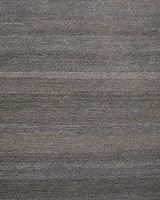
All of the tapestries in this exhibition are hand-woven treasures from the Himalayas. The traditional tapestries have been created from antique ceremonial garments, carefully restored and translated into meaningful works of art. Weaved by skilled artisans, they represent an ancestral culture that has been disappearing since 1959. The patterns have been designed by Jose Sanint and represent manifestations of enlightened culture, as preserved in the traditions of the Himalayan people.
The yarn has been derived from the wool of native goats, sheep and yaks. Unlike most of the world's bovids, these Himalayan herds live between 4000 and 7500 meters above sea level. Their natural coats contain some of the highest quality wool on earth. It is against Himalayan custom to even shave these valuable animals. Thus, the wool is painstakingly collected during the summer months while the sheep are shedding. This duty is performed both lovingly and patiently by nomadic shepherds, predominantly women.
Once the wool has been collected and hand-spun into yarn, the fibers are dyed with natural pigments made from many different types of regional flora - including flowers, berries, bark, grass, leaves and even seeds. The women place special care with regards to the quality of the yarn and the specific coloring of the threads. Each color symbolizes a different trait, and the various combinations of color - along with shape and pattern - give each tapestry a distinct look that represents the heritage of a specific region or village in the Himalayas. Once the fabric is dyed, the weaving is done by hand on a vertical loom. The women recite mantras as they work, preparing the ceremonial garbs to be blessed by enlightened monks.



The yarn has been derived from the wool of native goats, sheep and yaks. Unlike most of the world's bovids, these Himalayan herds live between 4000 and 7500 meters above sea level. Their natural coats contain some of the highest quality wool on earth. It is against Himalayan custom to even shave these valuable animals. Thus, the wool is painstakingly collected during the summer months while the sheep are shedding. This duty is performed both lovingly and patiently by nomadic shepherds, predominantly women.
Once the wool has been collected and hand-spun into yarn, the fibers are dyed with natural pigments made from many different types of regional flora - including flowers, berries, bark, grass, leaves and even seeds. The women place special care with regards to the quality of the yarn and the specific coloring of the threads. Each color symbolizes a different trait, and the various combinations of color - along with shape and pattern - give each tapestry a distinct look that represents the heritage of a specific region or village in the Himalayas. Once the fabric is dyed, the weaving is done by hand on a vertical loom. The women recite mantras as they work, preparing the ceremonial garbs to be blessed by enlightened monks.


I met him at a house party in TriBeCa. He seemed to enjoy dancing.
Thursday, January 12, 2012

Monday, December 12, 2011
fiction(al), science
You can't build a car that violates the laws of physics. Same goes for a time machine. You can't go just anywhere, only to places it will let you go. You can only go to places that you will let yourself go.
I don't miss him anymore. Most of the time, anyway. I want to. I wish I could but unfortunately, it's true: time does heal. It will do so whether you like it or not, and there's nothing anyone can do about it. If you're not careful, time will take away everything that ever hurt you, everything you have ever lost, and replace it with knowledge. Time is a machine: it will convert your pain into experience. Raw data will be compiled, will be translated into a more comprehensible language. The individual events of your life will be transmuted into another substance called memory and in the mechanism something will be lost and you will never be able to reverse it, you will never again have the original moment back in its uncategorized, preprocessed state. It will force you to move on and you will not have a choice in the matter.
Everyone has a time machine. Everyone is a time machine. It's just that most people's machines are broken. The strangest and hardest kind of time travel is the unaided kind. People get stuck, people get looped. People get trapped. But we are all time machines. We are all perfectly engineered time machines, technologically equipped to allow the inside user, the traveler riding inside each of us, to experience time travel, and loss, and understanding. We are universal time machines manufactured to the most exacting specifications possible. Every single one of us.
I don't miss him anymore. Most of the time, anyway. I want to. I wish I could but unfortunately, it's true: time does heal. It will do so whether you like it or not, and there's nothing anyone can do about it. If you're not careful, time will take away everything that ever hurt you, everything you have ever lost, and replace it with knowledge. Time is a machine: it will convert your pain into experience. Raw data will be compiled, will be translated into a more comprehensible language. The individual events of your life will be transmuted into another substance called memory and in the mechanism something will be lost and you will never be able to reverse it, you will never again have the original moment back in its uncategorized, preprocessed state. It will force you to move on and you will not have a choice in the matter.
Everyone has a time machine. Everyone is a time machine. It's just that most people's machines are broken. The strangest and hardest kind of time travel is the unaided kind. People get stuck, people get looped. People get trapped. But we are all time machines. We are all perfectly engineered time machines, technologically equipped to allow the inside user, the traveler riding inside each of us, to experience time travel, and loss, and understanding. We are universal time machines manufactured to the most exacting specifications possible. Every single one of us.
Wednesday, July 6, 2011


Monday, July 4, 2011

Thursday, June 23, 2011
jennifer egan
Ted stepped toward the relief. He felt as if he'd walked inside it, so completely did it enclose and affect him. It was the moment before Eurydice must descend to the underworld a second time, when she and Orpheus are saying good-bye. What moved Ted, mashed some delicate glassware in his chest, was the quiet of their interaction, the absence of drama or tears as they gazed at each other, touching gently. He sensed between them an understanding too deep to articulate: the unspeakable knowledge that everything is lost.
"The pause makes you think the song will end.
And then the song isn't really over,
so you're relieved. But then
the song does actually end, because
every song ends, obviously, and
THAT. TIME. THE. END. IS. FOR. REAL."
The whole book is worth it, but if you're pressed for time, 176-251. It's the first time a PowerPoint made me feel so many different things.
Monday, June 20, 2011
As we drove up the N2, Linda pointed out the different shades of green that made up the landscape. I said mmhmm and nodded in acknowledgment, continuing to stare out the window. I had been enjoying the neon and pine and jade and moss as well.
Matthias sped up and the colors began to blur. My mind drifted to David and how his brows always furrowed when he was in the thick of one of his drawings. He would hold two or three crayons in one hand, and furiously color with the other. The craggy lines of a sailboat, the different blues used for swirling waves, an invasion of lightning bolts in an otherwise empty sky - these were the details that made his pictures alive, different, full of emotion, entirely his.
I last saw David four years ago, so he is now eleven. He would have drawn everything I've seen here and since last December so beautifully. I picture him insisting that we stop the car, running out looking around crouching down touching this and that - examining the big and small things with awe and curiosity.
Matthias sped up and the colors began to blur. My mind drifted to David and how his brows always furrowed when he was in the thick of one of his drawings. He would hold two or three crayons in one hand, and furiously color with the other. The craggy lines of a sailboat, the different blues used for swirling waves, an invasion of lightning bolts in an otherwise empty sky - these were the details that made his pictures alive, different, full of emotion, entirely his.
I last saw David four years ago, so he is now eleven. He would have drawn everything I've seen here and since last December so beautifully. I picture him insisting that we stop the car, running out looking around crouching down touching this and that - examining the big and small things with awe and curiosity.
Subscribe to:
Posts (Atom)
